5 Differences Between Sea Sand and River Sand
Choosing the right sand for concrete or mortar is not a small detail — it affects strength, durability and even whether the steel inside will last. Sea sand and river sand look similar but behave very differently. This guide explains the 5 key differences, why sea sand is risky in concrete, and how to tell them apart in seconds.
Why the Difference Matters
River sand is the workhorse of construction — cheap, clean and safe for concrete. Sea sand carries salt and chloride from the ocean, and unless it is properly washed and desalted it will slowly corrode the steel bars inside reinforced concrete, weakening the structure over years. Many builders learn this the hard way.
5 Key Differences Between Sea Sand and River Sand
1. Salt and Chloride Content
This is the biggest difference. Sea sand contains high levels of chloride, which attacks steel rebar and causes rust. River sand has almost no salt, which is why it is safe for reinforced concrete. If you must use sea sand, it has to be washed and desalted until the chloride level meets the local standard (for example ≤ 0.06% in China).
2. Appearance and Colour
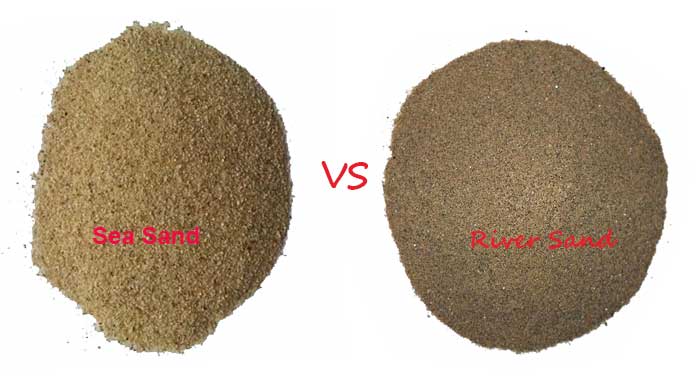
Sea sand looks darker — brown or grey — and usually contains shells and small marine fragments. River sand is brighter, typically light yellow, and looks cleaner. The colour difference is usually obvious at a glance.
3. Particle Size and Gradation
River sand is coarser and better graded, with a moderate surface roughness and few impurities. Sea sand is finer — some particles are almost like powder — and such ultra-fine sand is not suitable for concrete on its own. On construction sites river sand is commonly screened into 4–8, 8–16, 10–20, 20–40, 40–70 and 50–100 mesh sizes; sea sand has no such consistent grading.
4. Texture and Feel
Pick up a handful and shake it off. Sea sand feels sticky and clings to your hand, while river sand falls away cleanly. This quick feel test works on site in seconds.
5. Composition
Sea sand is mainly silica (quartz, feldspar) with little mica and good roundness. River sand has more calcium, aluminium and mica, and its mineral make-up varies more by source. In practice this matters less than the salt content when choosing sand for concrete.
Quick Comparison Table
| Feature | River Sand | Sea Sand |
|---|---|---|
| Salt / chloride | Very low — safe for rebar | High — corrodes steel |
| Colour | Bright, light yellow | Darker, brown/grey |
| Grain size | Coarser, well graded | Finer, some powder |
| Impurities | Little, mostly silt | Shells, organics, salt |
| Feel | Falls off cleanly | Sticky, clings to hand |
| Best for | Reinforced concrete, plaster | Only after desalting, non-rebar |
Why Sea Sand Is Dangerous in Concrete
Chloride ions in sea sand break down the protective layer on steel rebar and start rusting it. Over years this rust expands, cracks the concrete from inside and shortens the building’s life — or worse. That is why most building codes restrict sea sand in reinforced structures. If sea sand is your only option, wash and desalt it first, and use corrosion-resistant rebar where allowed.
Which One Should You Choose?
For almost every concrete and mortar job, river sand is the safe, economical choice — it needs no treatment and won’t damage steel. Choose sea sand only when river sand is unavailable or too expensive, and only after washing it to meet your local standard. When in doubt, run a simple salt test or ask your supplier for a chloride report.
Frequently Asked Questions
Can sea sand be used for construction after washing?
Yes. After desalting to a chloride level below the local standard (for example ≤ 0.06% in China), washed sea sand can be used for non-reinforced elements or with corrosion-resistant rebar.
How can you tell sea sand from river sand?
Sea sand is darker and contains shells and salt; river sand is brighter and cleaner. A quick taste test (saltiness) and the presence of shells identify sea sand in seconds.
Is river sand always better than sea sand?
>For reinforced concrete, yes — river sand is salt-free and safe. Sea sand can work only after desalting and is more suited to non-reinforced or treated structures.
Choosing the right sand for your mix? See our guide on how to select suitable sand for concrete, compare all 12 types of sand, or check sand washer types.
 5 Differences Between Silica Sand and Regular Sand
 How About Artificial Sand Compared With Natural Sand
 Concrete Sand | How To Select Suitable Sand For Concrete
 12 Types of Sand and Their Uses for Construction