10 Types of Rock Drill Bits and How to Choose
A rock drill bit is the part that actually does the breaking, and choosing the wrong one is a fast way to lose drilling speed and waste money. There are 10 common types, each built for a certain rock and drilling method. This guide breaks down every type, compares them in one table, and gives you a simple checklist to pick the right bit.
What Is a Rock Drill Bit?
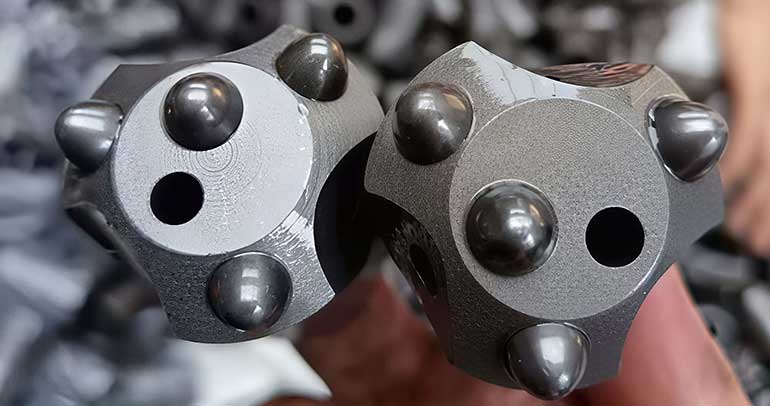
A rock drill bit is the cutting tool at the end of a rock drill that breaks rock through impact, rotation or a combination of both. It takes the most wear in any drilling job, so its type, size and material directly decide penetration rate and operating cost.
10 Types of Rock Drill Bits
1. Button Bit
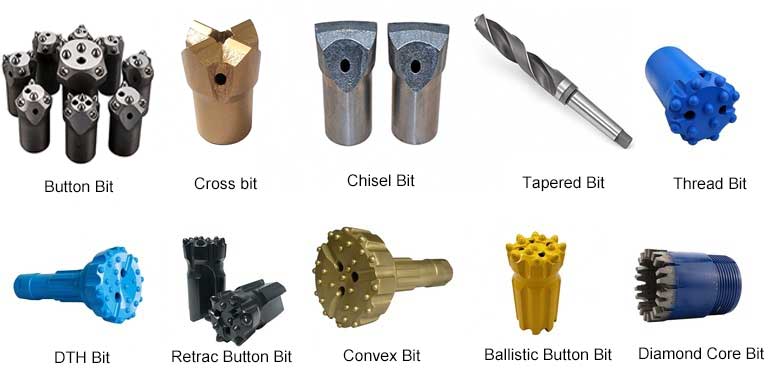
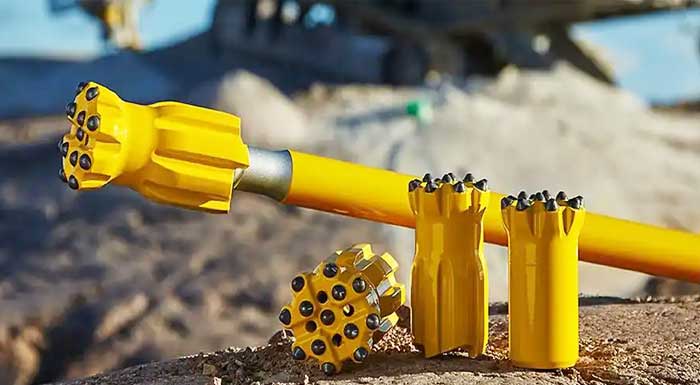
The most common bit for hard rock. Carbide buttons on the face crush the rock on impact, giving fast penetration in granite, basalt and other abrasive formations. Used in both top-hammer and DTH drilling.
2. Cross Bit
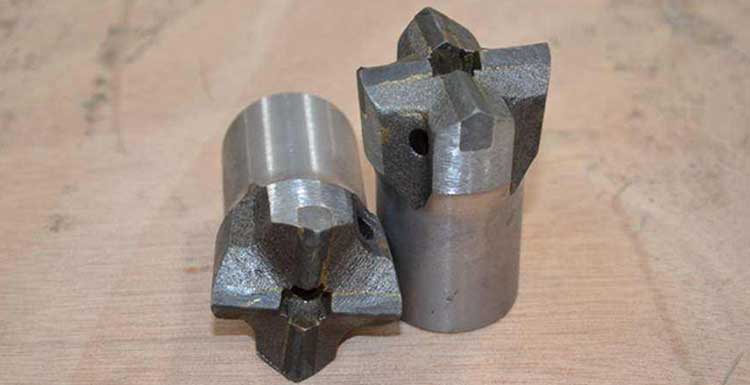
A cross-shaped cutting edge with about 30–50% higher wear resistance than a straight edge. It is stable, easy to re-grind and adapts well to different rock conditions — a good all-rounder for medium rock.
3. Chisel Bit
A flat chisel edge that suits soft to medium rock and light jackhammer work. Simple and cheap, but it wears faster in hard, abrasive ground.
4. Tapered Bit
Uses a tapered shank that locks directly into the drill rod, common on handheld rock drills. Easy to change and good for medium-hard rock.
5. Thread (R-Thread) Bit
Connects to extension rods by a threaded joint, used for long-hole drilling. The thread keeps the string rigid and transmits impact efficiently over depth.
6. DTH (Down-the-Hole) Bit
The hammer sits behind the bit and strikes it directly, so energy is not lost through long rods. Ideal for deep, straight holes in very hard rock.
7. Retrac Button Bit
Has backward-facing reaming buttons that widen the hole while retracting. Made for fractured or soft rock where the drill string tends to get stuck.
8. Convex Bit
A domed face with inserts around the edge, giving balanced cutting for general rotary-percussive drilling in medium rock.
9. Ballistic Button Bit
Tall, pointed carbide buttons that chip rock aggressively. Good for abrasive medium-to-hard rock and gives high penetration in the right ground.
10. Diamond Core Bit
A diamond-tipped crown that cuts a cylindrical core for sampling, or bores holes in concrete. Used where a clean, intact core is needed rather than crushed rock.
Rock Drill Bit Comparison Table
| Type | Best Rock | Cutting Method | Typical Use |
|---|---|---|---|
| Button (carbide) | Hard / abrasive | Carbide buttons crush | Blast holes, DTH, top-hammer |
| Cross | Medium | Cross-shaped edge | General percussion drilling |
| Chisel | Soft – medium | Flat chisel edge | Light jackhammer work |
| Tapered | Medium | Tapered shank + inserts | Handheld rock drills |
| Thread (R-thread) | Hard | Threaded connection | Long-hole drilling |
| DTH (down-the-hole) | Very hard | Piston impact near bit | Deep, straight holes |
| Retrac button | Fractured rock | Back reaming carbide | Soft / fractured formations |
| Convex | Medium | Convex face inserts | General rotary-percussive |
| Ballistic button | Medium – hard | Ballistic carbide buttons | Abrasive medium rock |
| Diamond core | Very hard | Diamond crown | Core sampling, concrete |
How to Choose a Rock Drill Bit
1. Match the Rock
Hard, abrasive rock needs button or DTH bits with tungsten-carbide buttons. Soft to medium rock can use cross, chisel or tapered bits that are cheaper and easier to re-grind.
2. Match the Drill and Hole Size
Choose the bit size to match your rock drill model and hole diameter. The thread and shank must meet the machine’s standard so the bit stays stable and efficient.
3. Match the Drilling Method
Top-hammer drilling uses button or cross bits; DTH uses DTH bits; handheld work uses tapered or chisel bits. Use the bit designed for your method.
4. Choose the Right Material
High-hardness alloy steel keeps a sharp edge and holds its shape under strong impact. If your ground is very abrasive, spend on better carbide — it pays back in longer life.
5. Pair Bit with Rod
Match the bit to the drill rod (reaming or rock-breaking rod) so the whole string works as one unit and avoids premature failure.
6. Don’t Skip Safety
Use bits with locking mechanisms and anti-fracture design to protect both operators and equipment on site.
Frequently Asked Questions
How do I choose a rock drill bit?
Match the bit to rock hardness (button bits for hard rock), the drilling method (top-hammer vs DTH), hole diameter and machine power, then check the shank taper and flushing type.
What is the difference between a button bit and a cross bit?
Button bits use carbide buttons and drill faster in hard rock; cross bits have a cross-shaped edge, are cheaper and suit medium to soft rock.
How long does a rock drill bit last?
It depends on rock abrasiveness and steel grade; life ranges from a few hundred to several thousand meters. Re-grind the gauge when the diameter drops to keep penetration.
Go deeper: 6 types of rock drill bit materials and top tips for shank adapter fractures.
Need a drill rig to match? See our rock drill machines — or contact our team for sizing advice.
 Drill Bit | Drill Rod | Connection Sleeve | Shank Adapter Functions
 6 Types of Rock Drill Bit Materials and Their Features
 Rock Drill | Working | Types | How To Choose Rock Drill
 How To Solve Drill Rod Jamming Faults [ Top 6 Tips ]